Heat Pump Installation Cost NZ (2026): Prices by Type
Heat pump installation cost in NZ for 2026: what high-wall, multi-split and ducted systems typically cost, what changes a quote, and how to compare.
By the GetListed team · Updated · 8 min read
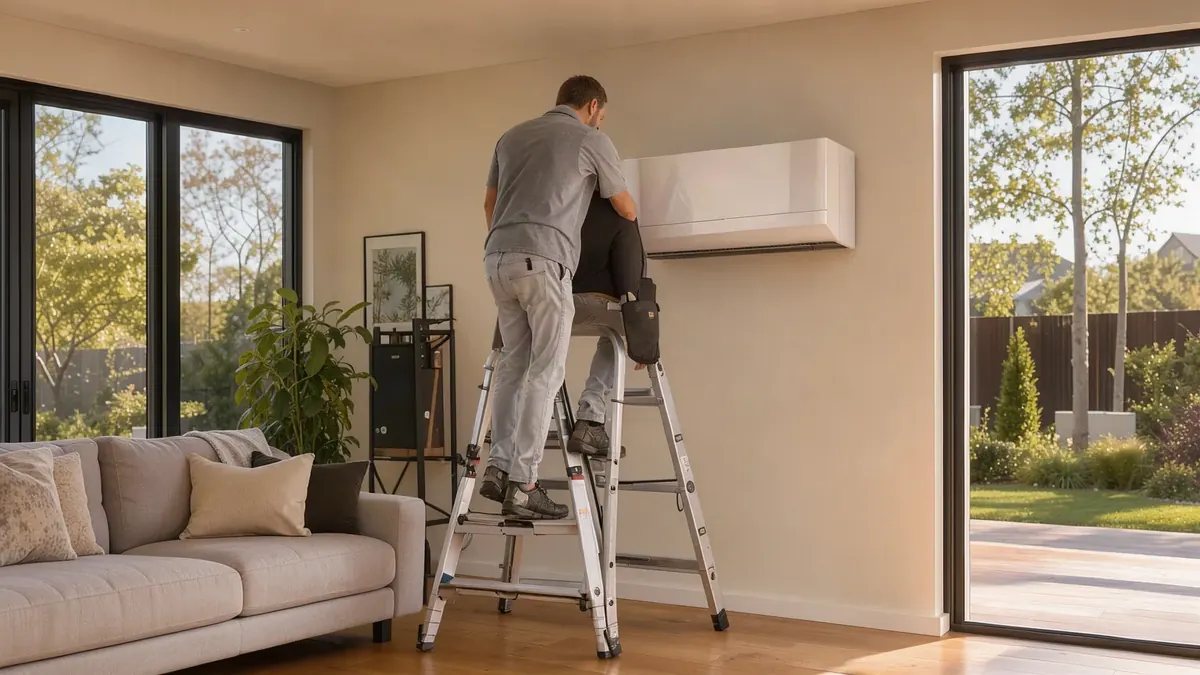
A standard high-wall heat pump supplied and installed in New Zealand typically costs about $1,700 to $4,000, according to Mitre 10. Ducted systems for a whole house cost far more, with a Wellington installer putting most projects between $12,000 and $22,000 or more.
Your own price depends on the unit's size, how far the outdoor unit sits from the indoor one, and what the installer finds on site. Every figure in this guide comes from a named NZ source and is a guide only. Quotes vary by region, brand and installer, so always get more than one.
How much does a heat pump cost in NZ?
The ranges below are published figures from NZ retailers and installers, not fixed prices.
| System | Typical supply and install | Source |
|---|---|---|
| Standard high-wall split | $1,700 to $4,000 | Mitre 10 |
| High-wall split, Christchurch | $2,400 to $4,000 | Modserve |
| Ducted, Wellington | $12,000 to $22,000+ | Sustain Trust |
| Multi-split | No reliable NZ price published | See below |
Archipro's NZ cost guide gives a wider spread for air-source heat pumps overall, from $1,500 to $10,000, with most buyers paying $1,500 to $2,500 for the unit. It puts installation alone at $900 to $2,000 for a standard back-to-back job.
Auckland and other cities are rarely priced separately online. For a local number, compare quotes from heat pump installers in Auckland or the heat pumps directory for your area.
High-wall split vs multi-split vs ducted
High-wall split
One indoor unit mounted high on a wall, linked to one outdoor unit. Modserve calls this the lowest-cost option. It suits a lounge or open-plan living area.
Modserve lists unit-only prices from about $1,500 for a 2.5 kW model to about $3,000 for a premium 7 kW unit. Installation for a straightforward back-to-back job is $900 to $1,725 on the same page.
Multi-split
One outdoor unit serves two to five indoor units, according to Modserve. It involves more pipework and electrical work than a single split, so installation costs more. Mitre 10 also says multi-splits cost more upfront than a single unit.
Consumer NZ notes that a multi-split is usually cheaper than fitting several separate outdoor units, though longer pipe runs can add cost. No published NZ price for a typical multi-split turned up, so ask installers to itemise yours.
Ducted
A ducted system heats and cools the whole home through insulated ceiling ducts, with one central unit. Modserve says it has the highest materials and labour costs.
Sustain Trust says a 100 m², three-bedroom Wellington house heating all rooms except bathrooms and hallways would likely start around $15,000. It says most Wellington projects land between $12,000 and $22,000 or more, including GST. Smaller homes, or systems that heat only part of the house, sit at the lower end.
If you are weighing ducted against several splits, ask a few heat pump installers in Wellington or elsewhere to price both.
What size heat pump do you need?
Capacity is the most important spec. Consumer NZ warns that a unit that is too small will struggle, while one that is too big is inefficient and costs more than necessary. Its sizing estimates assume a standard 2.4 m ceiling, so go larger for high ceilings.
Archipro suggests a rule of thumb of about 0.12 kW per square metre of living space. The examples below are simple arithmetic from that ratio.
| Room size | Rough capacity |
|---|---|
| 12 m² bedroom | About 1.4 kW |
| 20 m² lounge | About 2.4 kW |
| 30 m² living area | About 3.6 kW |
| 40 m² open plan | About 4.8 kW |
Archipro adds that most models start at 2.5 kW. It says large glass areas may need 10 to 15 percent more capacity, while a well-insulated home can need up to 10 percent less. Colder regions need more output.
Treat this as a starting point. An installer should size the unit on site.
What affects heat pump installation costs?
Two homes can get very different quotes for the same unit. The main factors are below.
- Back-to-back or long pipe run. Modserve describes a back-to-back install as the indoor unit on an outside wall with the outdoor unit directly behind it, which keeps labour to a minimum. Long pipe runs or awkward outdoor unit positions can increase the quote.
- Electrical work. Modserve says switchboard upgrades or extra electrical compliance work can add to the price. If your board is old or full, ask whether the quote includes an electrician for this.
- Wall type. Core drilling through thick or complex walls can raise the cost.
- Condensate pump. Where water cannot drain by gravity, a condensate pump may be needed.
- Access and storeys. Archipro notes hard-to-reach sites push labour up. A two-storey home, or an outdoor unit on a first-floor wall or deck, usually means more effort and longer pipe runs, so expect your installer to price it.
Archipro notes winter is peak season and suggests spring or summer for installs in colder regions.
How much does a heat pump cost to run?
Consumer NZ says a very large heat pump of 10 kW or more might cost about $1,000 a year to run, while a small 2.5 kW unit can cost under $200 a year. Actual cost depends on how much you use it and your electricity price.
To estimate your own, take the annual kWh figure from the energy label and multiply it by your price per kWh. Consumer NZ cites a national average of roughly 25 to 29 cents per kWh across its pages, so check your own bill.
Consumer NZ explains that a coefficient of performance (COP) of 3 means 1 kW of electricity produces about 3 kW of heat.
Energy ratings
Heat pumps imported since 1 July 2021 carry the Zoned Energy Rating Label, according to Consumer NZ. More stars means more efficient, and the label shows estimated annual energy use and noise levels.
Only compare star ratings between units of similar capacity. A lower annual kWh figure means a cheaper unit to run.
Grants and subsidies in 2026
The main scheme is EECA's Warmer Kiwi Homes. EECA says heat pump grants continue in 2026, although it stopped taking new wood and pellet burner applications from 9 January 2026.
Third-party summaries report a grant of up to 90 percent of a high-wall heat pump, capped at $3,450. Selectra lists these conditions:
- The home was built before 2008.
- You own it and live in it.
- You hold a Community Services Card or SuperGold Combo card, or live in a qualifying lower-income area.
- Ceiling and underfloor insulation are already installed.
- There is no working fixed heater in the home's living areas.
Selectra also says rentals are not eligible and that ducted systems are not funded. Rules and caps change, so check EECA's online eligibility tool or ask an approved provider before relying on any figure. No current council or retailer heat pump schemes could be confirmed, so ask your council and installer what is on offer.
Heat pumps and the Healthy Homes heating standard
Landlords must provide a fixed heater that can heat the main living room, according to Tenancy Services. Each heater must be at least 1.5 kW, and heat pumps must have a thermostat. Portable heaters, open fires and unflued gas heaters do not count.
The capacity needed comes from the official heating assessment tool. Tenancy Services also says electric heaters other than heat pumps cannot be used if the room needs more than 2.4 kW, with a limited top-up exception for older heating. Heat pumps are not caught by this limit.
Tenancy Services says landlords who breach the standards can face financial penalties of up to $7,200. For more detail, see our healthy homes providers category.
How to get and compare heat pump quotes
Get three itemised quotes, using the same room and capacity for each.
| Ask each installer | Why it matters |
|---|---|
| Which model and kW capacity? | Lets you compare units fairly |
| Does the price include GST? | Some figures are quoted either way |
| How long is the pipe run? | Longer runs raise the price |
| Is electrical work included? | A switchboard upgrade can add cost |
| Where does the outdoor unit go? | Affects noise, access and labour |
| What warranty applies? | Covers both unit and workmanship |
Consumer NZ stresses using an experienced installer. Ask for recent local jobs, and discuss the outdoor unit's position and noise to neighbours before you commit.
Prefer to deal with installers directly? GetListed lets you find and contact local providers with no lead fees. You can browse heat pump installers in Christchurch, Hamilton and other regions through the heat pumps category.
Frequently asked questions
How much does it cost to install a heat pump in NZ?
A standard high-wall unit typically costs about $1,700 to $4,000 supplied and installed, according to Mitre 10. Installation alone is $900 to $1,725 on a straightforward job, per Modserve. Complex jobs and larger systems cost more.
How much is a ducted heat pump in NZ?
Sustain Trust says most Wellington ducted projects cost between $12,000 and $22,000 or more, including GST. Home size, ceiling height and ductwork are the biggest drivers. Get at least three quotes.
What size heat pump do I need for a living room?
A rough guide is 0.12 kW per square metre, so a 30 m² living room needs around 3.6 kW, per Archipro. High ceilings, big windows and poor insulation push this up. Ask your installer to size it on site.
Are heat pumps expensive to run?
Not usually. Consumer NZ says a 2.5 kW unit can cost under $200 a year, while a very large 10 kW or more unit might cost about $1,000. Your usage and power price decide the real figure.
Is there a government grant for heat pumps?
Yes, for some households. EECA's Warmer Kiwi Homes programme still funds heat pumps in 2026, but eligibility is limited, and third-party summaries say rentals are excluded. Use EECA's eligibility tool to check.
Do landlords have to install a heat pump?
Not specifically. The Healthy Homes standard requires a fixed heater of at least 1.5 kW that can heat the main living room, and a heat pump is one qualifying option. Use the official heating assessment tool to check the capacity required.
Sources
- Heat pump installation, Mitre 10
- Heat pump installation in Christchurch, Modserve
- Ducted heat pump system costs in Wellington, Sustain Trust
- The true cost of buying and installing a heat pump in New Zealand, Archipro
- What size heat pump do I need, Archipro
- Heat pump buying guide, Consumer NZ
- Energy rating labels explained, Consumer NZ
- Heating standard, Tenancy Services
- Warmer Kiwi Homes information, EECA
- Warmer Kiwi Homes 2026 guide, Selectra