Solar Panel Installation Cost NZ (2026): Prices by Size
Solar panel installation cost in NZ for 2026: typical prices for 3–10 kW systems, what a battery adds, payback, consents and how to pick an installer.
By the GetListed team · Updated · 8 min read
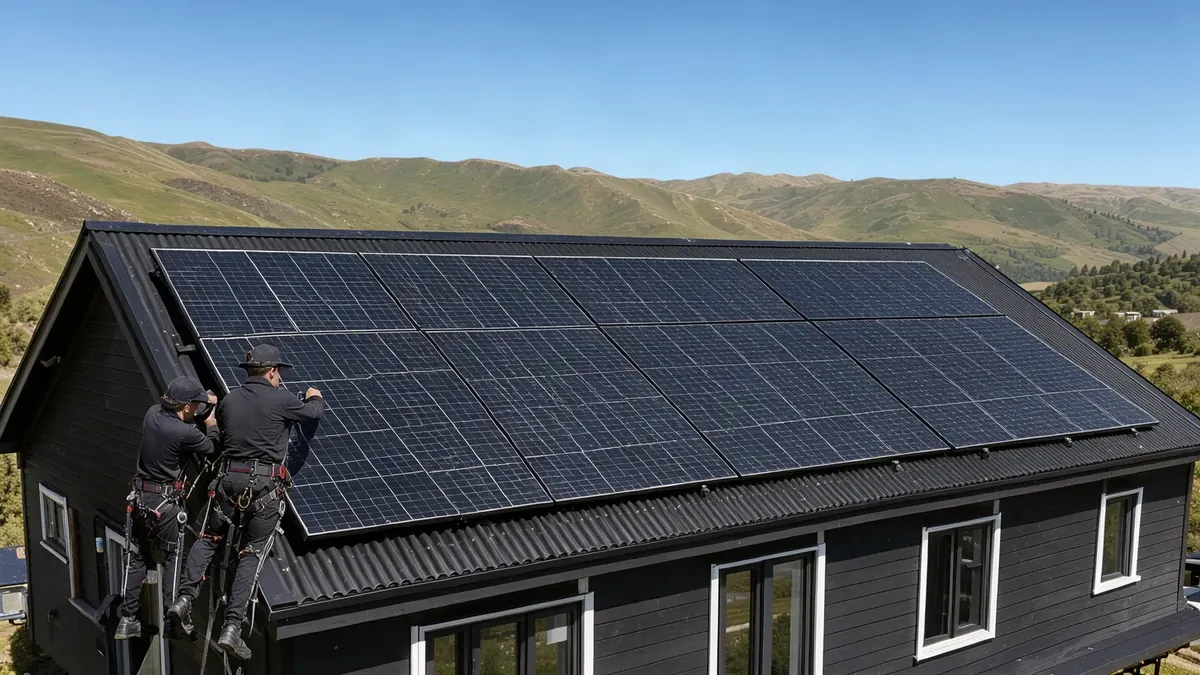
Solar panel installation cost in NZ is typically about $7,000 for a 3 kW system, $10,500 for 5 kW and $19,000 for 10 kW, including GST and installation. Those figures come from My Solar Quotes' 2026 pricing data, and individual quotes vary with your roof, inverter and region. A battery adds roughly $5,000 to $15,000 on top, according to EECA.
The government's own number is similar. In May 2026 the Ministry for Regulation put a typical small to medium rooftop system at $8,500 to $11,500.
Treat every price here as a guide and get at least three written quotes. You can browse solar energy providers across New Zealand and contact them directly.
How much do solar panels cost in NZ by system size?
My Solar Quotes publishes fully installed prices (GST included) based on verified NZ installs and quotes, last updated in October 2026. The table below shows its typical figures for string-inverter systems without a battery.
| System size | Panels (500 W) | Typical household | Typical installed price |
|---|---|---|---|
| 3 kW | 6 | Small home, 1–2 people | about $7,000 |
| 5 kW | 10 | Medium home, 2–3 people | about $10,500 |
| 6 kW | 12 | Smaller family home | about $12,000 |
| 8 kW | 16 | Typical new install | about $15,500 |
| 10 kW | 20 | Large home, EV or spa | about $19,000 |
Source: My Solar Quotes, 2026. Quotes vary by installer, roof and location.
The same data gives an average of $2.04 per watt, with the middle half of installs between $1.74 and $2.36 per watt. Smaller systems cost more per watt, averaging $2.54 per watt under 5 kW, while 10 kW systems come in near $1.90 per watt.
Which size suits your home?
Bigger is not always better. EECA says systems of 3 to 5 kW often work well financially because they cover a good share of what an average household uses. A larger system makes sense if you have an electric vehicle, a spa or someone home during the day.
What changes the price: inverters, roof and extras
Two quotes for the same number of panels can differ by thousands. The inverter, roof and add-ons explain most of the gap.
Inverter types
My Solar Quotes' prices assume a string inverter, one box that converts power from a whole string of panels. Microinverters sit under each panel, cope better with shading and can push the price towards the upper end, about $2.36 per watt. A battery-ready (hybrid) inverter costs extra but saves swapping hardware if you add a battery later.
The inverter is the part most likely to fail first. My Solar Quotes says it usually needs replacing after 10 to 15 years, so check the warranty and ask what an extension costs.
Roof, access and location
Remote sites may attract extra travel costs, and your lines company may charge a connection fee (see the consents section).
What does a solar battery add to the cost?
EECA says a home battery typically adds $5,000 to $15,000, depending on type and capacity. My Solar Quotes puts a typical battery of around 11 kWh at about $13,000, with most people paying $10,000 to $16,500.
| Battery size | Typical installed price |
|---|---|
| 5–7 kWh | about $8,000 |
| 8–12 kWh | about $10,500 |
| 12–15 kWh | about $15,000 |
| 15 kWh and up | about $18,000 |
Source: My Solar Quotes, 2026. Larger batteries cost less per kWh.
A battery roughly doubles the price of a solar-only quote and adds about two years to payback, based on My Solar Quotes' analysis of 279 residential quotes. Consumer NZ also says a battery usually lengthens payback, though it can still make sense for backup during a power cut or if you cannot shift your power use to daytime.
What affects solar payback in NZ?
EECA says that if your household can use most of the electricity it generates, savings can pay back the upfront cost in 7 to 10 years. My Solar Quotes' 2026 analysis found a median of 6.9 years for solar-only quotes and about 9 years with a battery. Those are payback periods stated on quotes, not measured results, so be wary of any quote that looks too good.
Self-consumption beats buy-back
Power you use at home is worth your full retail rate. Power you export earns only the buy-back rate. Powerswitch lists current buy-back rates by retailer, quoted excluding GST, so compare like with like.
The rate matters less than you might expect. My Solar Quotes' example shows an extra $168 a year between an 8c and a 16c buy-back plan. Daytime loads lift self-consumption, such as hot water, an EV charger or a heat pump running while the sun is out.
Region, power price and roof orientation
Sunshine matters, but less than most people assume. My Solar Quotes says sunnier regions like Nelson and Blenheim generate more than Southland, yet the difference is smaller than people expect. Local power prices count too: it quotes Wellington at about 37c per kWh, while Balclutha and Kerikeri exceed 50c.
North-facing, unshaded roofs are ideal. East and west roofs can work well, and shading can cut output significantly. A good installer will model each roof face before quoting. Households in cities like Auckland and Hamilton can compare local installers on exactly this.
Do you need consent to install solar panels in NZ?
Usually not a building consent for a standard roof-mount. Since 23 October 2025, roof-mounted solar arrays up to 40 m² in wind zones up to High are exempt from building consent. Larger arrays, or those in higher wind zones, can also be exempt when a Chartered Professional Engineer designs or reviews them.
Exempt work must still meet the Building Code. Check with your council about district plan rules, heritage overlays or boundary setbacks, especially if you plan ground-mounted panels.
Connecting to the lines company
You must get your lines company's approval before switching on. For systems of 10 kW or less, the process follows Part 6 of the Electricity Industry Participation Code. Your installer should handle the application, the meter change and telling your retailer so you get credit for exported power.
Some lines companies charge a connection fee. My Solar Quotes puts it at $80 to $350, averaging about $140, while around nine of New Zealand's 30-plus lines companies charge nothing for standard home systems. Export limits are set by each lines company. An electrician must commission the system before it is switched on.
How to choose a solar installer and pay for it
Check SEANZ membership and endorsements
The Sustainable Energy Association of New Zealand (SEANZ) membership is the industry's mark of quality. My Solar Quotes advises looking for the SEANZ logo or checking the SEANZ directory, and asking for a current Mains Parallel Generation endorsement. A certified electrician is not automatically a good solar installer, so ask how many systems they have fitted.
Compare quotes on cost, component brands, installation details and warranties. Typical warranties are 25 to 30 years on panel performance, at least 5 years on the inverter and at least 5 years on workmanship. Be cautious of prices that look too cheap and of high-pressure sales.
Use this checklist when comparing quotes:
| Ask this | Why it matters |
|---|---|
| Is GST included? | Quotes without GST look 15% cheaper |
| Who handles the lines company application? | Saves you time and delay |
| What are the inverter brand and warranty? | The inverter is the likeliest part to fail |
| Do you hold a SEANZ endorsement? | Some banks require it for green loans |
GetListed lets you find and contact local providers directly, with no lead fees. Start with solar installers in Christchurch or Wellington, or browse all solar energy installers.
Green loans and finance
Most banks offer low-rate green loans as mortgage top-ups. According to My Solar Quotes' October 2026 summary:
- ANZ, ASB and BNZ: 1% interest, up to $80,000, over 3 years.
- Westpac Warm Up Loan: 0% interest, up to $50,000, up to 5 years.
- Kiwibank Sustainable Energy Loan: variable rate, 7 to 10 years.
You generally need an existing mortgage and at least 20% equity, and most banks require a quote from a SEANZ member. ASB limits quote age to 60 days and Westpac to 90. Check each bank's current terms before applying, and ask about break fees if you later move your mortgage.
Frequently asked questions
How much does it cost to install solar panels in NZ?
Expect about $7,000 for 3 kW, $10,500 for 5 kW and $19,000 for 10 kW, including GST, according to My Solar Quotes' 2026 data. The Ministry for Regulation cites $8,500 to $11,500 for a typical small to medium system. Your quote will vary with roof type, inverter and location.
How much does a solar battery cost in NZ?
EECA says a home battery typically adds $5,000 to $15,000. My Solar Quotes reports about $13,000 for an 11 kWh battery. Batteries usually lengthen payback, so they suit backup needs more than pure savings.
Is solar worth it in NZ in 2026?
For many homes, yes, if you use most of the power yourself. EECA puts payback at 7 to 10 years in that case, and My Solar Quotes found a median of 6.9 years for solar-only quotes. Homes that are empty all day with little daytime use will see slower returns.
Do I need a building consent for solar panels?
Usually not. Roof-mounted arrays up to 40 m² in wind zones up to High have been exempt since 23 October 2025. You still need your lines company's approval to connect, and you should check district plan rules with your council.
Are solar panels in Auckland more expensive than elsewhere?
None of the sources reviewed publish city-by-city prices, so compare local quotes. Remote areas may attract travel charges, and lines company fees differ by area. You can compare solar installers in Auckland directly.
Sources
- My Solar Quotes: how much does a solar power system cost in NZ
- My Solar Quotes: payback on solar for NZ homeowners, 2026 data
- My Solar Quotes: solar buyer's guide, SEANZ and warranties
- My Solar Quotes: financing a solar power system
- EECA: breaking down home solar costs and savings
- Consumer NZ: are solar panels right for your home?
- Ministry for Regulation: solar review launched to cut cost and complexity
- Building Performance (MBIE): solar panel building consent exemption changes
- Powerswitch: solar buy-back rates
- Electricity Authority: Part 6, connection of distributed generation