Asbestos Testing NZ: Process, Cost and Next Steps
Asbestos testing in NZ explained: which homes are at risk, how sampling and surveys work, lab turnaround, cost factors and when licensed removal is needed.
By the GetListed team · Updated · 9 min read
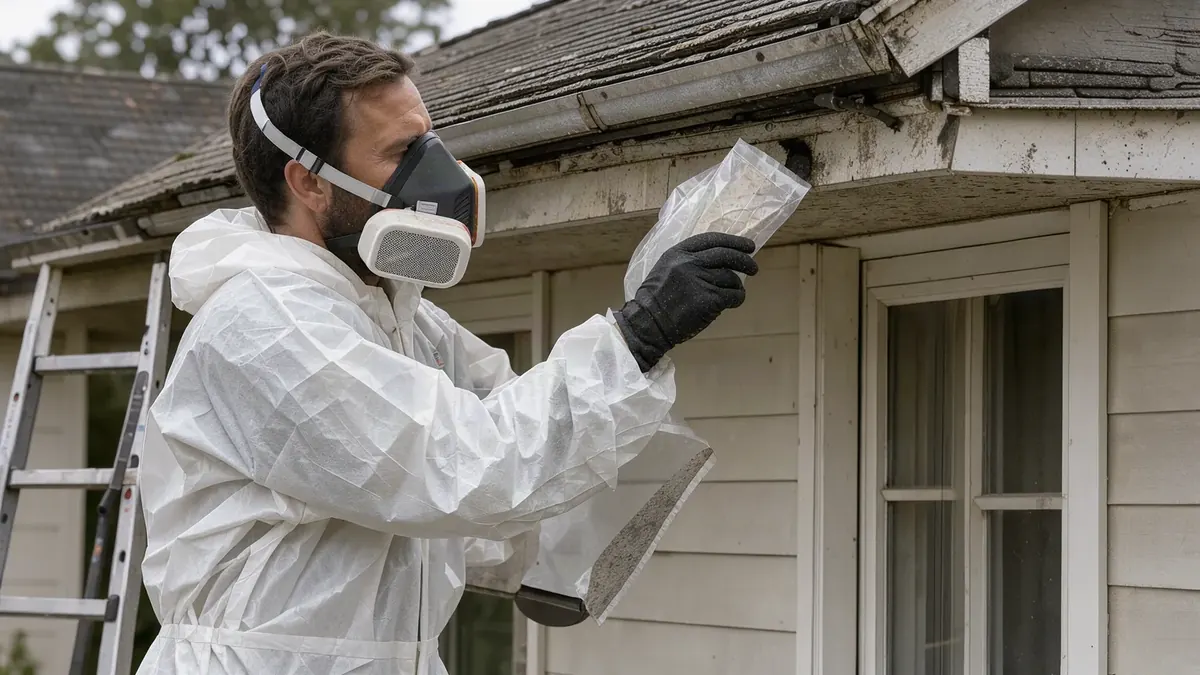
Asbestos testing in NZ means taking a small sample of a suspect building material and having an accredited laboratory examine it under a microscope. It is the only way to confirm asbestos, because WorkSafe says you cannot tell by looking, and asbestos cement can look identical to cement without it. Any home built or altered before 1 January 2000 may contain it.
You only need to test materials you plan to cut, drill, sand, remove or demolish, or are unsure about. This guide covers which homes are at risk, where asbestos hides, the difference between a sample and a survey, what testing costs, and when WorkSafe rules require a licensed removalist.
If you would rather get on with it, you can browse asbestos testing providers on GetListed and contact them directly. GetListed charges no lead fees, so you deal with the business itself.
Which NZ homes are most at risk?
WorkSafe says a home built before 1 January 2000 may contain asbestos materials, and the risk is lower for homes built after that date. The same cut-off applies to work done on a home. WorkSafe's guidance for residential landlords refers to a structure "built, altered or refurbished before 1 January 2000".
A garage, shed or fence from the pre-2000 era can contain asbestos even when the house is newer.
Condition matters as much as age. Health NZ says materials containing asbestos in good condition generally will not release fibres. Risk rises when material is crumbly, damaged or disturbed, for example by cutting, drilling or sanding during a renovation.
Where asbestos hides in a house
Asbestos was used because it resists heat, fire and weather. WorkSafe's homeowner guidance lists these common places:
| Area | What to look for |
|---|---|
| Ceilings | Textured ceilings such as Glamatex or Whisper |
| Wet areas | Fibrolite-type sheet in kitchens, bathrooms, toilets and laundries; backing behind wall tiles, bath panels and splashbacks |
| Floors | Vinyl tiles and the adhesive beneath them; backing on sheet vinyl and linoleum; some older carpet underlay and poured flooring |
| Roof and exterior | Roof sheeting (such as "Super Six"), ridge capping, gutters, downpipes, gables, eaves and soffits, and some cladding including imitation brick |
| Heating and plumbing | Insulation around heaters, fireplaces, stoves, flues and hot water pipes |
| Electrical | Older switchboards |
| Outbuildings | Fences, carports, garages, outhouses and garden sheds |
| Paint and compounds | Patching compounds and textured paint |
WorkSafe's advice if you suspect asbestos is simple: do not disturb it, tell anyone else in the home (and your landlord if you rent), and call a reputable asbestos contractor. If you are not sure whether something contains asbestos, treat it as if it does.
Sampling or a full survey: which do you need?
A sample answers one question: does this material contain asbestos? A survey answers a wider one: where is asbestos in this building, how much, and what condition is it in? WorkSafe's good practice guidance for surveyors describes two survey types.
| Management survey | Refurbishment/demolition survey | |
|---|---|---|
| Purpose | Find and record known or presumed asbestos so it can be managed while the building is occupied | Find all asbestos in the area to be disturbed (or the whole building for demolition) |
| How intrusive | Minor intrusion, mainly to collect samples | Intrusive: may open wall cavities, ceilings and cladding, or lift flooring |
| Presuming asbestos | Allowed in some situations | Not allowed: suspect material that may be disturbed must be confirmed by sample testing |
| Typical use | Landlords and owners who want a register and management plan | Before a renovation, upgrade or demolition |
WorkSafe's guidance says that if you plan to refurbish or demolish, you need a refurbishment/demolition survey even if you already have a management survey. For a kitchen and bathroom renovation, the survey only needs to cover those rooms and the access route.
For a single-material question, a few samples may be enough. For a renovation, extension or relocation, ask for a survey.
How lab analysis works and how long it takes
WorkSafe's survey guidance says laboratories analysing samples for asbestos must be accredited to ISO 17025. In NZ that accreditation is issued by IANZ. When a business such as a builder or landlord arranges analysis, the Asbestos Regulations require an accredited lab, so ask any provider to confirm theirs.
Samples are small. One IANZ-accredited NZ lab asks for roughly five grams, double-bagged, with each sample in its own bag. The report states whether asbestos was found.
Turnaround varies by lab and workload. Capital Environmental Services, an IANZ-accredited lab, says testing usually takes a few days, with an urgent service available at a higher cost per sample. Eurofins says it can give results the same day for time-critical samples. Ask for the turnaround in writing if your renovation is waiting on the result.
What asbestos testing costs in NZ
We could not find a published NZ average for a full home survey, so we are not going to quote one. What we can verify is the lab fee: Capital Environmental Services lists standard sample analysis at $80.50 including GST per sample, with urgent analysis costing more. Check the lab's current price before you rely on it.
Total cost depends on who collects the samples and how much you need. The main factors are:
- Number of samples. Each separate material (ceiling, flooring, backing board, adhesive) is typically its own sample.
- Survey type. A refurbishment/demolition survey is more intrusive and takes longer than a management survey.
- Size and complexity. A large home with a sub-floor, roof space and outbuildings means more to inspect.
- Access. Locked roof spaces, furniture and difficult crawl spaces add time.
- Speed. Urgent lab analysis costs more.
- Location. Travel time to your property affects the call-out.
Get at least two written quotes. WorkSafe advises homeowners to compare quotes and not choose on price alone. A quote should state what work will be done, any tests required, how long it will take, and what it will cost.
DIY test kits vs an accredited asbestos assessor
You can post a sample to a lab yourself, and some labs publish instructions. The risk is the sampling itself: breaking off a piece can release fibres. Health NZ's advice is not to take a sample without consulting your local public health service first, and WorkSafe says sampling should be done by a reputable contractor.
If you do go DIY, the kit is only as good as the lab behind it. Confirm the sample goes to an IANZ-accredited laboratory, because a result from an unaccredited source may not satisfy your builder or insurer. A lab result covers one sample, not the rest of the house.
Hire a professional if you are a landlord, preparing for a renovation, buying a pre-2000 house, or the material is crumbly or damaged. Provider listings under asbestos testing show who services your area, including asbestos testing in Auckland, asbestos testing in Christchurch, asbestos testing in Wellington and asbestos testing in Hamilton. A building inspection on a purchase can also flag older materials worth testing.
What to do if the result is positive
A positive result does not mean you must rip anything out. WorkSafe and Health NZ both note that bonded asbestos in good condition is generally low risk if left undisturbed. Your options are to leave it and monitor it, enclose or seal it, or have it removed.
Removal makes sense when the material is damaged, or when your renovation will disturb it. Keep these points in mind:
- Do not sand, drill, scrape, water-blast or burn it.
- Landlords must identify asbestos and prepare an asbestos management plan before work that could expose people to fibres.
- If you accidentally disturb it, stop, keep people and pets out, close doors and windows, and call a reputable contractor.
- Asbestos waste must go to an authorised disposal site. Never put it in a normal council bin; ring your council first about where to take it.
When licensed asbestos removal is required
WorkSafe's licensing system has two removal classes, plus a small exemption:
| Work | Licence needed |
|---|---|
| Any amount of friable asbestos, or dust and debris contaminated with it | Class A |
| Any amount of non-friable (bonded) asbestos | Class B or Class A |
| Up to and including 10 m² of non-friable asbestos, cumulatively over the whole project for the site | No licence |
Friable asbestos is flaky or powdery and easily releases fibres. Non-friable means the fibres are bound in something like cement. The 10 m² limit is a total across the whole project, so several small jobs can add up past it.
Class A sites also need a licensed assessor to do air monitoring and issue the clearance certificate. For Class B sites, an independent competent person can issue it. Check any removalist or assessor on WorkSafe's licence holder register, and see our asbestos removal listings to find providers.
Frequently asked questions
How much does asbestos testing cost in NZ?
It depends on how many samples you need and who collects them. One accredited NZ lab lists standard analysis at $80.50 including GST per sample, and a survey adds the surveyor's time, travel and report. Get two or more written quotes.
How long does asbestos testing take?
Lab analysis usually takes a few days, and urgent options are available at a higher price. Some labs can turn around time-critical samples the same day. Booking a surveyor and getting samples to the lab adds time on top.
Can I test for asbestos myself?
You can send a sample to an accredited lab, but Health NZ says not to take one without consulting your local public health service, and WorkSafe says sampling should be done by a reputable contractor. Disturbing the material can release fibres. A professional is the safer option.
Do I need to test before renovating a pre-2000 home?
WorkSafe says to always check for asbestos before starting any work, including small repairs. Tradespeople and landlords have legal duties to identify asbestos before work that could expose people to it. For a renovation, ask for a refurbishment/demolition survey of the affected areas.
Is asbestos dangerous if left alone?
Not generally. Health NZ says materials in good condition do not release fibres, and the danger comes from disturbing them. Damaged or crumbly material is the concern.
Who can remove asbestos from my home?
Up to 10 m² of non-friable asbestos can be removed without a licence, but WorkSafe strongly recommends hiring a contractor. Larger amounts of non-friable asbestos need a Class A or Class B licence, and friable asbestos needs Class A.
Sources
- WorkSafe: Asbestos in the home
- WorkSafe: Asbestos licensing overview
- WorkSafe: Conducting asbestos surveys (good practice guidelines)
- WorkSafe: Where asbestos can be found
- WorkSafe: What residential landlords need to do to manage asbestos
- Health NZ: Asbestos in the home
- Capital Environmental Services: Asbestos sampling and testing in NZ
- Capital Environmental Services: Asbestos in the home, help for the homeowner
- Eurofins NZ: Asbestos identification and quantification