Meth Testing NZ: Costs, Thresholds and Rules
Meth testing in NZ explained: when to test a house, screening vs detailed testing, the 15 µg/100cm² limit, typical costs and how to choose a tester.
By the GetListed team · Updated · 8 min read
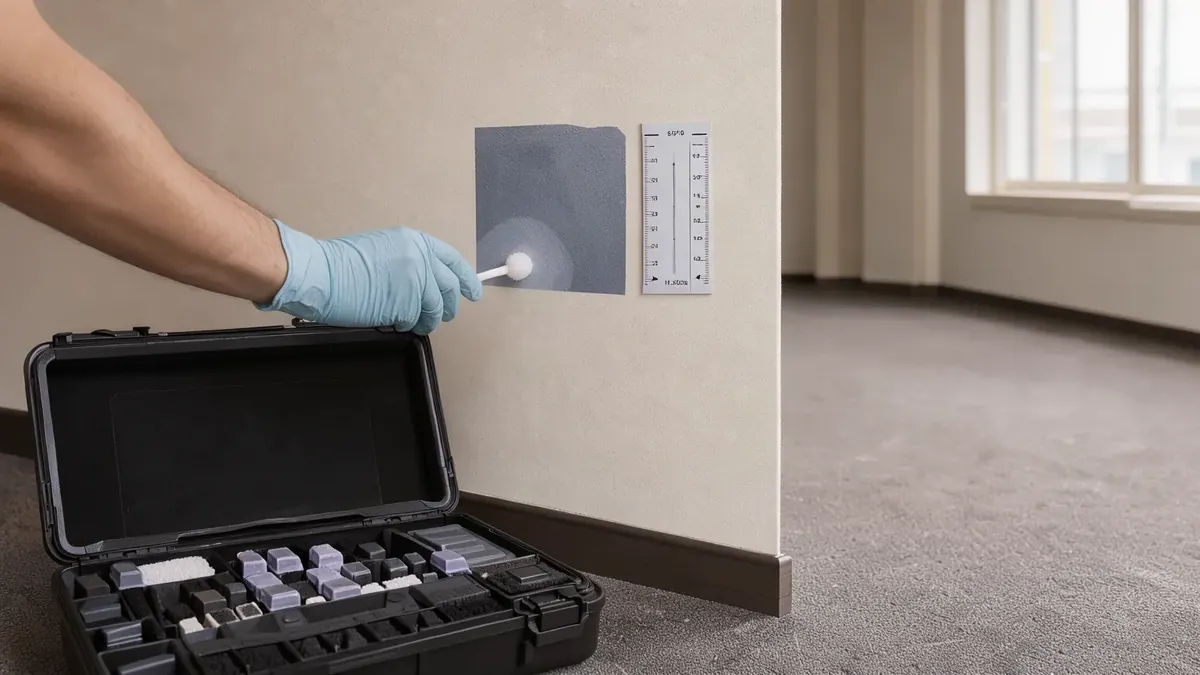
Meth testing in NZ means taking surface samples from a property and having them analysed for methamphetamine residue. Since 16 April 2026, rental properties have a legal limit: a space is contaminated if residue is above 15 µg/100cm², and it must be decontaminated until it is at or below that level.
For buyers and sellers there is no single law, but the same 15 µg/100cm² figure is the level the Real Estate Authority treats as a defect that agents must disclose. This guide covers when a meth test is worth doing, how screening differs from detailed testing, what it costs and how to pick someone independent.
What changed in 2026: the current meth limit
For years, NZ used the 1.5 µg/100cm² level recommended in the 2017 standard, NZS 8510:2017. That figure was a guideline, not a law for tenancies. The Residential Tenancies (Managing Methamphetamine Contamination) Regulations 2026 replaced it for rentals.
According to Tenancy Services, the rules now work like this:
| Level (µg/100cm²) | What it means for a rental |
|---|---|
| 15 or less | Acceptable. No decontamination required. |
| Above 15 | Contaminated. The landlord must decontaminate that space down to 15 or less. |
| Above 30 | The property is uninhabitable, unless the contamination is only in a remote and inconsequential part. |
Contamination is assessed room by room. If only the garage is over 15, only the garage needs decontaminating.
NZS 8510:2017 has not disappeared. The regulations still use its testing and decontamination methods, with modifications. Standards New Zealand said in June 2026 that people should keep referring to the existing standard while a revision is drafted, with public consultation planned for late 2026 and publication expected in early 2027.
When you should test for meth
The science behind routine testing is thin. A 2018 report by the Prime Minister's Chief Science Advisor, Sir Peter Gluckman, found no evidence of adverse health effects from third-hand exposure to smoking residue. The Real Estate Authority's guidance following that report says testing is warranted where there is strong suspicion, or Police advice, of heavy use or manufacture.
In practice, a test makes sense when:
- You are buying a house with signs of past drug activity, such as strange odours, heavily stained or damaged surfaces, or a neighbour's warning.
- You are a landlord and Police or the council tell you meth was likely manufactured on the property.
- A tenant or landlord has done a screening test showing a result above 15 µg/100cm².
Testing is not required between tenancies. Landlords can test then if they think it is appropriate, according to Tenancy Services.
Screening vs detailed testing
These are different jobs, and mixing them up is the most common mistake. A screening assessment tells you whether a closer look is needed. Detailed testing gives the room-by-room numbers that decide what happens next.
| Screening assessment | Detailed testing | |
|---|---|---|
| Purpose | Indicates whether meth is likely present | Measures contamination room by room |
| Who can do it | Anyone, using an approved method | Qualified professionals only |
| Typical method | Approved screening kits or lab composite samples | Individual samples sent to a lab |
| Legal weight in a rental | Triggers detailed testing if a valid result is above 15 | Used to determine contamination and clearance |
Some methods are not approved. Tenancy Services lists field composite tests and unvalidated test kits as not allowed.
Detailed testing is required for a rental when Police or a council say meth was likely manufactured there, or when a valid screening finds an area above 15 µg/100cm² and the landlord knows about it. Tenants must get test results within 7 days.
What meth testing costs in NZ
There is no regulated price list, so costs come down to what each company advertises. Treat the figures below as starting points and ask for a written quote.
- Envirocheck advertises baseline screening assessments from $249 plus GST.
- Safe & Healthy Home Solutions advertises baseline screening from $269 plus GST.
- Prices for detailed assessments are generally quoted on request, because they depend on the property.
What pushes the price up:
- Test type. Composite screening costs less than sampling each surface individually.
- Property size. More rooms and surfaces mean more samples.
- Location. Travel to rural or remote properties adds cost.
- Clearance testing. Retesting after decontamination is an extra cost, and it repeats if levels are still above 15.
- Property type. Multi-unit and commercial properties are quoted differently.
Envirocheck also puts average decontamination at $15,000 to $30,000. That is a provider's own estimate, and actual costs vary with the extent of contamination and what has to be replaced.
The tenancy rules do not set a general rule for who pays for testing or decontamination. Landlords must arrange decontamination, and disputes over payment can go to the Tenancy Tribunal.
Decontamination: what the process involves
Under the regulations, landlords must decontaminate any space above 15 µg/100cm², either themselves or with a professional. The method is based on section 4 of NZS 8510:2017.
Tenancy Services says that, in a rental:
- Light fittings and installed heaters should be cleaned as thoroughly as possible.
- Landlord-provided carpets and soft furnishings that can be kept are HEPA-vacuumed and steam cleaned.
- Items that cannot be cleaned, such as couches and mattresses, are removed and replaced.
- A qualified professional then retests. If any area is still above 15, the cleaning and retesting repeat.
Tenants do not have to move out, but relocation and rent reductions should be discussed and recorded in writing. If a property is above 30 and unfit to live in, the landlord (if not at fault) must give 7 days' notice to end the tenancy and the tenant (if not at fault) 2 days.
Buying or selling a house: meth testing and disclosure
The 2026 regulations apply to residential tenancies, not sales. For sales, the Real Estate Authority said in June 2018 that confirmed results of 15 µg/100cm² or above are a property defect that agents must disclose. Results below that need not be volunteered but must be shared if a buyer asks.
If you are buying and suspect a meth lab, the REA advises asking your lawyer to make a satisfactory meth test a condition of your offer. Build in enough time for lab results.
A building inspection will not usually cover meth unless you ask for it as an add-on, so check what your inspector offers.
Insurance and meth contamination
Cover varies by insurer and by policy. The Insurance Council of New Zealand said in 2017 that insurers' approaches range from excluding meth losses entirely, to higher excesses, to sub-limits, to full cover if the owner screens tenants and inspects regularly. That is dated, so read your current policy wording.
Before you buy or let a property, ask your insurer or broker in writing:
- Whether contamination from manufacture and from use are treated differently.
- What the limit and excess are.
- Which testing standard or level the policy relies on.
Landlords using a property manager should ask what testing and reporting steps they follow when meth is suspected.
How to choose a meth tester
The new rules put independence in writing. Under the regulations, a paid tester must be separate from whoever decontaminates the same property, and the person who retests after decontamination cannot be the person who did the cleaning.
Check these before you book:
- Independence. The company should not also sell decontamination for the same job, or should split the roles between separate people. Ask them to confirm this in the quote.
- Qualifications. Detailed testing must be done by a qualified professional. For paid screening, Tenancy Services says testers must meet the competency requirement in section 7.1 of the standard, unless they are suitably qualified or work for an ISO/IEC 17020-accredited inspection body or ISO/IEC-accredited laboratory.
- Method. Ask which method they use and whether it follows NZS 8510:2017 as modified by the regulations.
- Reporting. You want a report with room-by-room results in µg/100cm², not just a pass or fail.
You can browse meth testing providers across the country, or look for meth testing in Auckland, Wellington, Christchurch and Hamilton. GetListed lets you find and contact local providers directly, with no lead fees.
Frequently asked questions
Do I need a meth test when buying a house?
There is no legal requirement to test when buying. The Real Estate Authority says testing is warranted where there is strong suspicion or Police advice of heavy use or manufacture. If you are concerned, ask your lawyer to add a satisfactory meth test as a condition of your offer.
What is the acceptable meth level in NZ?
For rentals, it is 15 µg/100cm² under the Residential Tenancies (Managing Methamphetamine Contamination) Regulations 2026. Above 15 a space must be decontaminated, and above 30 a rental is uninhabitable unless the contamination is only in a remote and inconsequential part. The older 1.5 µg/100cm² level in NZS 8510:2017 is no longer the legal limit for rentals.
Is a meth screening test enough?
A screening test shows whether meth is likely present, but it is not the final word. If a valid screening shows an area above 15 µg/100cm² in a rental, the landlord must arrange detailed testing by a qualified professional. Screening on its own cannot formally determine contamination under the regulations.
How much does a meth test cost in NZ?
Advertised baseline screening starts at about $249 to $269 plus GST from providers such as Envirocheck and Safe & Healthy Home Solutions. Detailed testing is quoted per property, depending on size, number of samples and location. Always get the scope of work in writing.
Who pays for meth testing in a rental?
The rules do not set a general rule on who pays. Landlords must arrange detailed testing and decontamination when required, and payment disputes can be taken to the Tenancy Tribunal.
Can the same company test and clean the property?
Not for the same job. Tenancy Services says the person doing paid screening or detailed testing must be separate from the person decontaminating, and post-cleaning testing cannot be done by whoever did the cleaning.
Sources
- Tenancy Services: Guidelines on meth contamination
- Tenancy Services: Meth testing and decontamination standards
- Tenancy Services: New methamphetamine contamination rules now in effect
- Tenancy Services: New methamphetamine contamination regulations to take effect on 16 April
- Ministry of Housing and Urban Development: Methamphetamine regulations
- Standards New Zealand: Work begins to revise NZS 8510:2017
- Real Estate Authority: New advice on methamphetamine contamination for real estate agents and home buyers
- Insurance Council of New Zealand: Insurance Council supports new meth standard
- Envirocheck: How much does meth testing cost in NZ?
- Safe & Healthy Home Solutions: About meth testing services