Real Estate Agent Fees NZ (2026): Commission Explained
Real estate agent fees in NZ are usually a tiered commission plus GST and marketing costs. See a worked example and how to negotiate and compare agents.
By the GetListed team · Updated · 9 min read
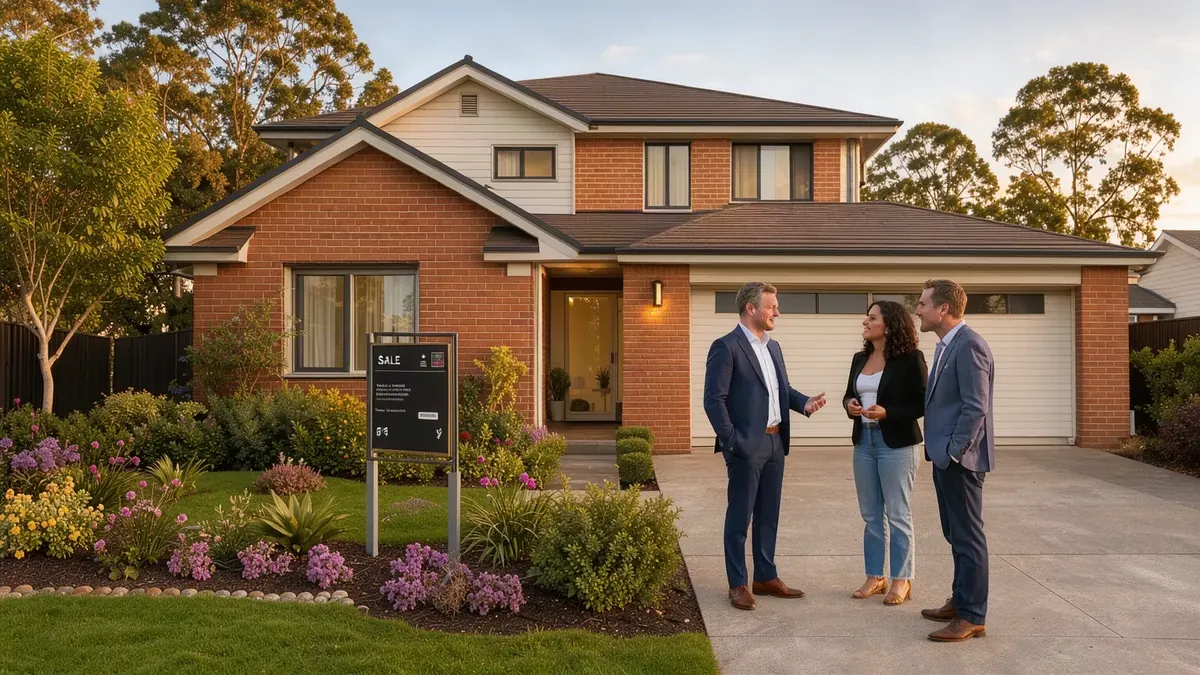
Real estate agent fees in New Zealand are usually a commission worked out as a percentage of your sale price, plus GST, plus an administration fee and marketing costs. The percentage is often tiered, with a higher rate on the first slice of the price and a lower rate on the rest. Nothing is fixed by law, so every part of it can be negotiated before you sign.
The Government's Settled site, run by the Real Estate Authority (REA), gives 3% on the first $400,000 plus 2% on the balance as an example of a tiered structure. Real rates vary by agency, region and property, so treat any published figure as a guide and get your own quote in writing.
This guide explains how commission is calculated, what a $900,000 sale could cost, which extras to watch for, and how to check and compare real estate agents before you commit.
How real estate commission works in NZ
Settled says commission is usually a percentage of the sale price. REA's guidance for agents also describes it as commonly a fixed amount plus a percentage, with GST added on top.
Consumer NZ describes three ways agents charge:
- Set percentage: the same cut on every dollar of the price.
- Tiered percentages: a higher cut on the lower tier. Its example is 3.95% on the first $300,000 and 2% on every dollar above that.
- Upfront fee: a fixed or maximum fee, which can rise with the estimated sale price.
MPA Magazine's 2024 update on NZ commissions reports that tiered rates commonly run from 2.95% to 3.95% on the first $400,000 to $500,000, then around 2% to 2.5% on the remainder. That is a general industry summary, not any one agency's rate card.
Commission is normally paid from the buyer's deposit, held in trust, when the sale and purchase agreement is signed. The agent must tell you in writing how it is calculated, when it is payable and whether the figures include GST.
A worked example on a $900,000 sale
The table below is illustrative arithmetic only. It uses two made-up tiered structures to show how the numbers move, and it is not a quote from any agency.
| Structure A: 3% on first $400,000, then 2% | Structure B: 3.95% on first $400,000, then 2% | |
|---|---|---|
| Commission on first $400,000 | $12,000 | $15,800 |
| Commission on remaining $500,000 | $10,000 | $10,000 |
| Commission before GST | $22,000 | $25,800 |
| GST at 15% | $3,300 | $3,870 |
| Commission including GST | $25,300 | $29,670 |
Structure A is the shape Settled uses as its example. Structure B uses the top of the first-tier range MPA Magazine reports. The $4,370 gap between them comes from a single 0.95 percentage point difference on the first $400,000.
Marketing and any administration fee come on top. Settled says agents usually charge an administration fee of around $500, in addition to commission. Ask whether that, and every other charge, is quoted with or without GST.
Marketing and other costs on top of commission
Marketing is where quotes differ most. Settled warns that you often have to pay advertising costs before the agent starts marketing your property.
The agent must give you a written marketing plan with costs, and make clear which advertising is included in their service and what you will be charged for. Common items include:
- Professional photography, video and floor plans
- Online listings and signage
- Print or social media advertising
- Auctioneer fees, if you choose to sell by auction
- Aerial or drone photography
Ask for every item to be listed with a price, and ask which are optional.
You may also need a valuation to price the property sensibly. A registered valuer gives an independent figure, which is useful when agents' appraisals are far apart.
Fixed-fee, low-commission and private sales
Consumer NZ notes that some agencies charge an upfront fixed fee or a maximum fee instead of a straight percentage. A fixed fee can look attractive on a higher-priced home, because the percentage model charges more as the price rises.
Compare the whole offer, not just the headline: what marketing is included, and whether any fee is payable if the property does not sell.
Some owners skip an agent entirely. Consumer NZ's survey found about 6% of the transactions it was told about had no agent, and the most common reason (61%) was avoiding fees. A third of people who had gone without an agent said they would not do it again, so weigh the saving against the time and negotiation skill involved. You will still need a lawyer or conveyancer either way.
What you can negotiate
Settled says commission is usually open to negotiation, and any change must be written into the agreement before you sign. Consumer NZ suggests telling agents you are talking to other agencies and asking them to beat your best offer.
Things worth raising:
- The percentage on each tier, and the dollar amount where the tiers switch
- Whether there is a minimum fee
- The administration fee
- Which marketing items are included, and the total marketing budget
- The length of the agreement and the type of agency
To compare quotes, work out each agent's commission on the midpoint of their appraisal. Consumer NZ recommends ignoring the high end of the range.
Agency agreements: sole vs general, 90 days and the approved guide
The agency agreement is the legal contract that sets out what the agent will do and what you will pay. Before you sign, the agent must give you the New Zealand Residential Property Agency Agreement Guide and ask you to confirm in writing that you received it. They must also give you the chance to get legal advice, and Settled recommends a lawyer or conveyancer checks it first. A property lawyer can also explain the cancellation terms in plain English.
The two main types differ in how many agents can sell your home:
| Sole agency | General agency | |
|---|---|---|
| Who can sell | One agent, and others cannot | Several agents can market it |
| Commission | Paid to that agent if the home sells during the term | Check the agreement: usually the agent who makes the sale |
| Cancellation | Any time after 90 days for a residential agreement longer than 90 days | Notice period set in the agreement, with 7 to 14 days the usual practice |
REA's guidance adds some detail. On a sole agency you can cancel by 5pm on the first working day after you receive a copy of the agreement, and the cancellation must be in writing. A residential sole agency agreement with a term longer than 90 days can be cancelled by either party at any time after day 90.
Settled also warns about paying two commissions if you sign more than one agency agreement. If you change agents, you may still owe commission when you sell to a buyer the first agent introduced, so ask for the agent's list of introduced buyers when an agreement ends.
Checking an agent and making a complaint
It is illegal to carry out real estate agency work in New Zealand without a licence. Use the REA public register to confirm your agent is licensed and to see whether any complaints have been upheld against them in the last three years. If you deal with an unlicensed person, REA cannot help if things go wrong.
If you have a problem with a licensed agent's conduct, REA's complaints page explains the process. Complaints can go to a Complaints Assessment Committee, and its decisions and those of the Real Estate Agents Disciplinary Tribunal are published online.
How to compare real estate agents
Settled suggests shortlisting two or three agents and asking each for a price assessment, a recommended sale method and a marketing proposal. Consumer NZ's 2026 agency survey found 43% of respondents reported a problem, most commonly feeling pressured, so price is only one part of the decision.
Use this checklist when you meet each agent:
| Question | What to look for |
|---|---|
| Is the agent licensed? | Current licence on the REA register, no recent upheld complaints |
| What is the commission? | Tier rates in writing, GST stated, a worked estimate on the appraised price |
| What does marketing cost? | An itemised plan with prices and what is included |
| Sole or general agency? | The length, cancellation terms and the 90-day rule |
| How did they reach the price range? | Recent comparable sales, not just a high number |
| Who will handle my sale? | The named agent, their experience with similar properties |
You can also search for agents by location. Start with real estate agents in Auckland, Wellington, Christchurch or Tauranga, or browse the full real estate agents directory. GetListed lets you find and contact local providers directly, with no lead fees.
Frequently asked questions
How much do real estate agents charge in NZ?
Most charge a tiered percentage of the sale price plus GST, an administration fee and marketing costs. Published sources describe first-tier rates of roughly 2.95% to 3.95%, with a lower rate on the balance, but rates are negotiable and vary by agency. On a $900,000 sale, the illustrative arithmetic above gives commission of about $25,300 to $29,670 including GST.
What is a typical real estate commission percentage in NZ?
There is no single standard rate. MPA Magazine reports 2.95% to 3.95% on the first $400,000 to $500,000 and around 2% to 2.5% after that, and Consumer NZ gives 3.95% on the first $300,000 and 2% above it as an example. Ask each agent for their rate in writing so you can compare like for like.
Is real estate agent commission negotiable in NZ?
Yes. Settled says commission is usually open to negotiation, and any change must be written into the agency agreement before you sign. Asking agents to beat the best quote you have is the approach Consumer NZ suggests.
Can I cancel my agency agreement after 90 days?
For a residential sole agency agreement with a term longer than 90 days, either you or the agent can cancel at any time after 90 days, according to REA. Cancel in writing. A general agency is usually ended by notice, with 7 to 14 days the common period, and you may still owe commission on a buyer the agent introduced.
Where do I complain about a real estate agent?
Complain to the Real Estate Authority, which handles complaints about licensed agents through Complaints Assessment Committees. Collect your documents first, then use the form on REA's complaints page.
Sources
- Selling with an agent, Settled (Real Estate Authority)
- Agency agreements, Real Estate Authority
- Agency agreements information sheet for licensees, Real Estate Authority
- REA public register
- Complaints and decisions, Real Estate Authority
- How to choose a real estate agent, Consumer NZ
- Best and worst real estate companies, Consumer NZ
- How much do real estate commissions cost in New Zealand? MPA Magazine